 Hydroxypropyl-Beta-Cyclodextrin
Mechanism and evidence · Panacea Bio Chem
How hydroxypropyl-beta-cyclodextrin regresses plaque
Hydroxypropyl-beta-cyclodextrin attacks plaque at its core: the cholesterol crystals. It dissolves them, switches the plaque's macrophages from storing cholesterol to exporting it, sends the cholesterol back to the liver and quiets the inflammation the crystals drive — and plaques regress, even on a cholesterol-rich diet.
The mechanism
- Dissolves cholesterol crystals. The ring takes cholesterol into its cavity and dissolves the crystals that fill advanced plaque — the same crystals that inflame the artery wall.[1,2]
- Reprograms the plaque's macrophages. Inside the cells it raises oxysterols, which switch on liver X receptors: the macrophages turn from cholesterol stores into cholesterol exporters.[1]
- Sends cholesterol home. Cholesterol efflux and reverse cholesterol transport increase: the cholesterol leaves the plaque for the liver and the body's own disposal route.[1]
- Cools the inflammation. It binds cholesterol crystals, reduces complement activation on them and lowers the inflammatory response of human blood cells.[3]
- Removes the most toxic sterol. It draws oxidised 7-ketocholesterol out of foam cells; a cyclodextrin dimer built for 7-ketocholesterol reverses foam-cell formation.[4,5]
The discoveries, year by year
| Year | Discovery | Evidence | What was found |
|---|---|---|---|
| 2016 | Plaque regression on a continued high-cholesterol diet | Mouse + human plaque tissue | Reduced plaque size and crystal load; plaques regressed even while the cholesterol-rich diet continued; oxysterols rose in human atherosclerotic plaques too.[1] |
| 2017 | Crystal-driven inflammation suppressed | Human plasma and whole blood | Bound cholesterol crystals and reduced complement activation and the inflammatory response they trigger.[3] |
| 2020 | A polymer form that protects hearing | Mouse | A beta-cyclodextrin polymer inhibited plaque growth more than the monomer at the same dose, without ototoxicity even at eight times that dose.[6] |
| 2021 | Crystals cleared from inside lysosomes | Mouse | A cyclodextrin nanoassembly that opens only inside the lysosome dissolved the crystals there, increased cholesterol efflux and promoted regression.[2] |
| 2025 | Human monocytes take up fewer crystals | Cells from 76 patients undergoing coronary angiography | Pre-treatment with a hydroxypropyl cyclodextrin (the gamma ring) significantly reduced cholesterol-crystal uptake by the patients' own monocytes.[7] |
| 2025 | Foam cells reversed by 7-ketocholesterol removal | Commentary on UDP-003 | Removing 7-ketocholesterol with the cyclodextrin dimer UDP-003 reverses foam-cell formation: a new candidate to promote plaque regression.[5] |
Why the crystals are the target
Cholesterol crystals form inside advanced plaque and inside the lysosomes of its macrophages. They activate complement and the inflammasome and keep the lesion inflamed. A treatment that dissolves them removes both the cholesterol and the trigger of the inflammation[1,3,2]. Oxidised 7-ketocholesterol, the most toxic sterol in plaque, is drawn out by the same ring[4].

The person behind the resource
Bogdan Dicoias
Biochemist and inventor · Director, Panacea Bio Chem
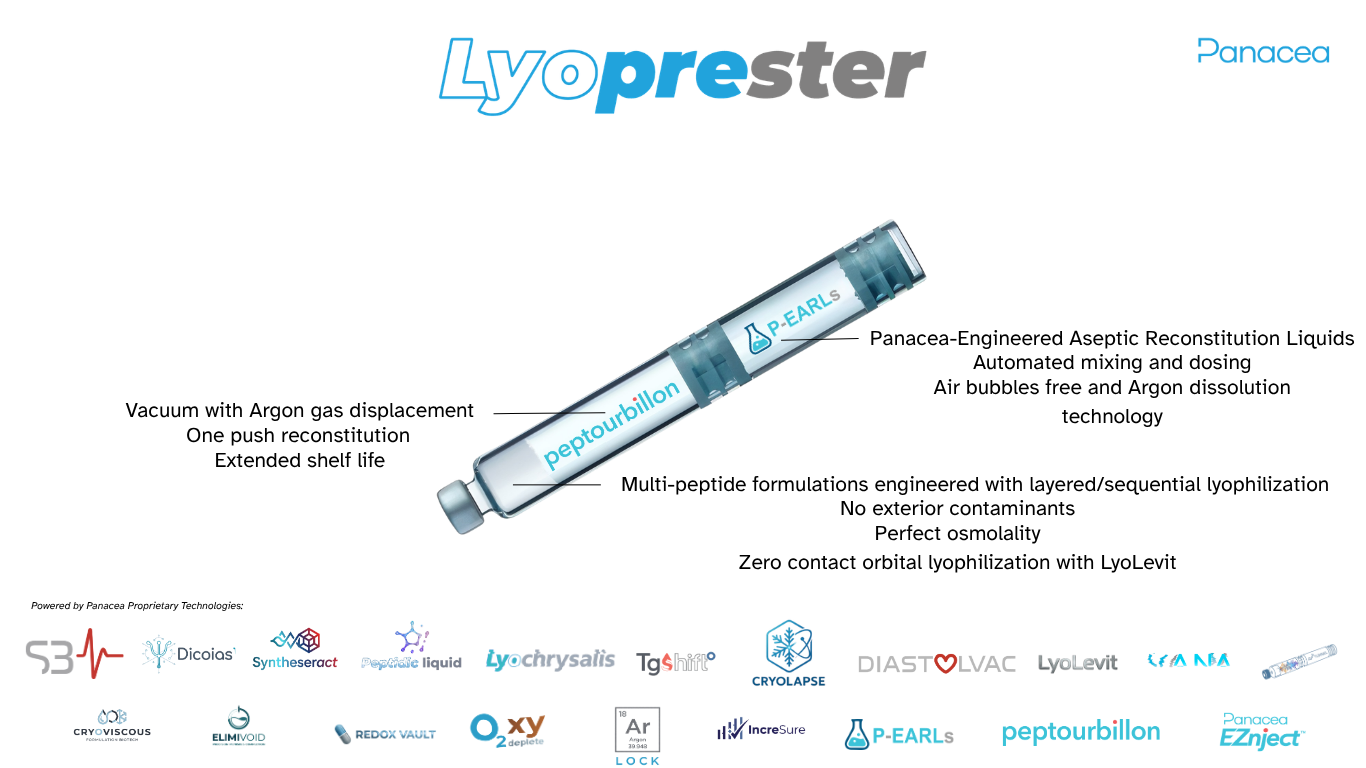
Panacea Bio Chem's cyclodextrin research is led by Bogdan Dicoias, inventor of the Peptourbillon® formulation engine and the Lyoprester® dual-chamber cartridge. dicoias.com
“Panacea Bio Chem is not merely interested in molecules. Panacea works on the physical, chemical and technological environment surrounding them.”
Bogdan Dicoias
Trending in the field
Recent developments in the field — refreshed 2026-11-07 by Panacea Bio Chem.
- A combination nano-immunotherapy targeting cholesterol crystals and STING signaling enhanced disruption atherosclerotic plaque pathogenesis. — PubMed, 2026
- Cyclodextrin reduces cholesterol crystal uptake by circulating monocytes in patients undergoing coronary angiography. — PubMed, 2025
- Cyclodextrin: Dual Functions as a Therapeutic Agent and Nanocarrier for Regulating Cholesterol Homeostasis in Atherosclerosis. — PubMed, 2025
- Reversal of foam cell formation by removal of 7-ketocholesterol with the cyclodextrin dimer UDP-003: a new potential drug candidate to promote atherosclerotic plaque regression. — PubMed, 2025
References
- Zimmer S, Grebe A, Bakke SS, Bode N, Halvorsen B, Ulas T, et al.. Cyclodextrin promotes atherosclerosis regression via macrophage reprogramming. Sci Transl Med 2016;8(333):333ra50. PMID 27053774
- Zhang Y, Gong F, Wu Y, Hou S, Xue L, Su Z, et al.. Poly-β-cyclodextrin Supramolecular Nanoassembly with a pH-Sensitive Switch Removing Lysosomal Cholesterol Crystals for Antiatherosclerosis. Nano Lett 2021;21(22):9736-9745. PMID 34748340
- Bakke SS, Aune MH, Niyonzima N, Pilely K, Ryan L, Skjelland M, et al.. Cyclodextrin Reduces Cholesterol Crystal-Induced Inflammation by Modulating Complement Activation. J Immunol 2017;199(8):2910-2920. PMID 28855312
- Kritharides L, Kus M, Brown AJ, Jessup W, Dean RT. Hydroxypropyl-beta-cyclodextrin-mediated efflux of 7-ketocholesterol from macrophage foam cells. J Biol Chem 1996;271(44):27450-5. PMID 8910326
- Lizard G. Reversal of foam cell formation by removal of 7-ketocholesterol with the cyclodextrin dimer UDP-003: a new potential drug candidate to promote atherosclerotic plaque regression. Atherosclerosis 2025;409:120419. PMID 40640004
- Kim H, Han J, Park JH. Cyclodextrin polymer improves atherosclerosis therapy and reduces ototoxicity. J Control Release 2020;319:77-86. PMID 31843641
- Lübbering N, Krogmann A, Jansen F, Latz E, Nickenig G, Zimmer S. Cyclodextrin reduces cholesterol crystal uptake by circulating monocytes in patients undergoing coronary angiography. PLoS One 2025;20(12):e0338635. PMID 41396996
Concept: Bogdan Dicoias · Published by Panacea Bio Chem Scientific Communications · first edition, 7 November 2026 · Evidence last searched 7 November 2026 (PubMed, ClinicalTrials.gov, ANZCTR) — every study cited here was read from its own record.
Panacea Peptides · Panacea Bio Chem · Bogdan Dicoias · Panacea Technologies — the Peptourbillon® formulation engine and the Lyoprester® cartridge are technologies invented by Bogdan Dicoias at Panacea Bio Chem.